Can Diabetics Eat Alphonso Mangoes? A Complete Guide

Can Diabetics Eat Alphonso Mangoes? A Complete Guide
The arrival of summer in India brings with it the irresistible aroma of Alphonso mangoes. But for individuals managing diabetes, this season often brings a recurring dilemma: can diabetics eat mangoes without causing a blood sugar spike? The short, science-backed answer is yes—but the key lies in understanding portions, the Glycemic Index (GI), and the crucial difference between naturally ripened and chemically treated fruit.
Understanding the Glycemic Index (GI) of Mangoes
When discussing diabetes and diet, the Glycemic Index is the most critical metric. The GI measures how quickly a carbohydrate-containing food raises blood glucose levels, ranked on a scale of 0 to 100.
Alphonso mangoes have a Glycemic Index of approximately 51. In the world of clinical nutrition, any food with a GI of 55 or below is classified as a low-to-medium GI food.
To put this into perspective:
- Watermelon has a GI of around 72.
- Ripe bananas have a GI of 62.
- White bread scores a 73.
Because the Alphonso mango sits comfortably in the 51 range, its natural sugars are absorbed more slowly into the bloodstream compared to high-GI foods, preventing sudden and dangerous blood sugar spikes.
Glycemic Load: The True Measure of Impact
While the Glycemic Index tells you how fast a food turns into sugar, the Glycemic Load (GL) tells you how much sugar a specific portion of that food will deliver to your bloodstream. Endocrinologists often emphasize GL over GI because it reflects real-world eating habits.
How to calculate Glycemic Load: (Glycemic Index x Grams of Carbohydrates per serving) ÷ 100
A standard, sensible serving of Alphonso mango for a diabetic is about 100 grams (roughly half a medium-sized mango). This portion contains roughly 15 grams of carbohydrates.
The Math for Alphonso: (51 x 15) ÷ 100 = 7.65
A Glycemic Load under 10 is considered low. Therefore, eating half a naturally ripened Alphonso mango has a low glycemic load, making it perfectly safe for most people with Type 2 diabetes when factored into their daily carbohydrate allowance.
The Danger of Calcium Carbide: Why Source Matters
Here is where many diabetics get into trouble: chemically ripened mangoes.
A significant portion of mangoes sold in local markets are ripened artificially using Calcium Carbide. This chemical forces the fruit to ripen rapidly and unnaturally. The result? The complex carbohydrates in the fruit break down into simple sugars much faster than nature intended. This not only alters the GI of the fruit, making it spike blood sugar faster, but Calcium Carbide itself contains traces of arsenic and phosphorus, which are highly toxic and place additional stress on the liver and pancreas.
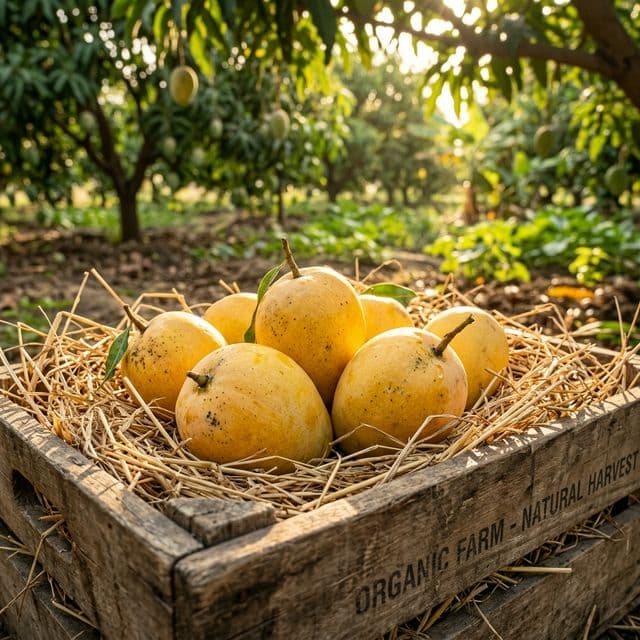
At Aam Native, our Alphonso mangoes are ripened using the traditional, slow hay-ripening method. This natural process allows the fruit's starches to convert to natural fructose slowly and uniformly. This slow conversion is what maintains the mango's medium GI, ensuring a steady, slow release of energy rather than a sudden spike.
Ayurvedic Perspective on Mangoes and Blood Sugar
Ayurveda, India's ancient system of medicine, has long held a nuanced view of mangoes. While excessively sweet, overripe mangoes are considered Kapha-aggravating (which correlates with lethargy and weight gain), a perfectly ripe, naturally harvested mango is seen as a tonic.
Ayurvedic practitioners often recommend eating mangoes with a pinch of cardamom or dried ginger. These spices are known to enhance the Agni (digestive fire), helping the body metabolize the fruit's natural sugars more efficiently.
Best Practices: How to Eat Mangoes if You Have Diabetes
If you are a diabetic looking to enjoy Alphonso mangoes this season, follow these endocrinologist-approved guidelines:
1. Master the Portion Size
Stick to 100 grams (about half a medium mango or one small mango) per day. Do not sit down with a bucket of mangoes. Slice it, savor it, and eat it slowly.
2. Pair with Protein and Fat
Never eat a mango on an empty stomach. Pair your mango slices with a handful of almonds, walnuts, or a small bowl of Greek yogurt. The healthy fats and proteins in the nuts and dairy will further slow down the absorption of the mango's natural sugars, flattening the blood sugar curve.
3. Timing is Everything
The best time to eat a mango is in the late morning (around 11 AM) or as a pre-workout snack in the late afternoon. Avoid eating mangoes late at night or immediately after a heavy, carb-rich meal (like rice or roti).
4. Skip the Juice and Aamras
Aamras and mango juices break down the natural fiber of the fruit. Fiber is what slows down sugar absorption. Furthermore, a bowl of Aamras often contains the pulp of 3 to 4 mangoes (drastically increasing the Glycemic Load) and is usually spiked with added white sugar. Stick to whole, sliced fruit.
Type 1 vs Type 2 Diabetes Considerations
For Type 2 Diabetics: The focus should be on insulin resistance and overall carbohydrate load. A 100g serving of mango can easily fit into a Type 2 diet, provided other high-carb foods (like rice or potatoes) are reduced on that day.
For Type 1 Diabetics: Since Type 1 involves administering insulin for all consumed carbohydrates, eating a mango simply requires accurate carb counting. Knowing that 100g of Alphonso yields roughly 15g of carbs allows for precise insulin dosing, meaning Type 1 diabetics can enjoy the fruit with careful management.
Alphonso vs Other Varieties
Not all mangoes are created equal when it comes to blood sugar. Varieties like Himsagar and Chausa are exceptionally high in sugar and have a slightly higher GI. Alphonso, with its complex balance of tartness and sweetness, along with its dense, zero-fiber pulp, is often considered one of the safer premium varieties when eaten in moderation.
FAQ
Can eating mango cause diabetes? No. Diabetes is a complex metabolic condition caused by genetics, lifestyle, insulin resistance, and pancreatic function. Eating naturally occurring fruit sugars in moderation does not cause diabetes.
Can I eat a whole mango every day if I have diabetes? It is generally recommended to stick to half a mango (100g) a day. If you wish to eat a whole mango, you must strictly account for the ~30g of carbohydrates and adjust your other meals accordingly.
Why do doctors say to avoid mangoes? Historically, doctors advised against all sweet fruits. Modern clinical nutrition now focuses on Glycemic Load and total daily carbs. Doctors who still issue blanket bans on mangoes are often relying on outdated nutritional advice.
Is it safe to eat Aam Native mangoes? Yes. Because Aam Native mangoes are GI-certified, farm-direct, and guaranteed 100% free of Calcium Carbide, they ripen naturally, preserving their medium Glycemic Index and making them a safer choice.
Disclaimer: This article is for informational purposes only and does not substitute professional medical advice. Always consult your endocrinologist or registered dietitian before making significant changes to your diabetic diet.
Found this helpful?
Share it with someone who loves mangoes.
Continue Reading
You Might Also Like


Farm-Direct · GI-Certified
Ready to taste the real Alphonso?
Zero carbide. Naturally ripened. Delivered in 24–48 hours.
Shop Mango Boxes →