The Ultimate Guide to Alphonso Mangoes
The universally undisputed King of Mangos, grown in the unique microclimate of the Konkan coast. Dive deep into the history, taste profile, and secrets of authenticating the world's most luxurious fruit.
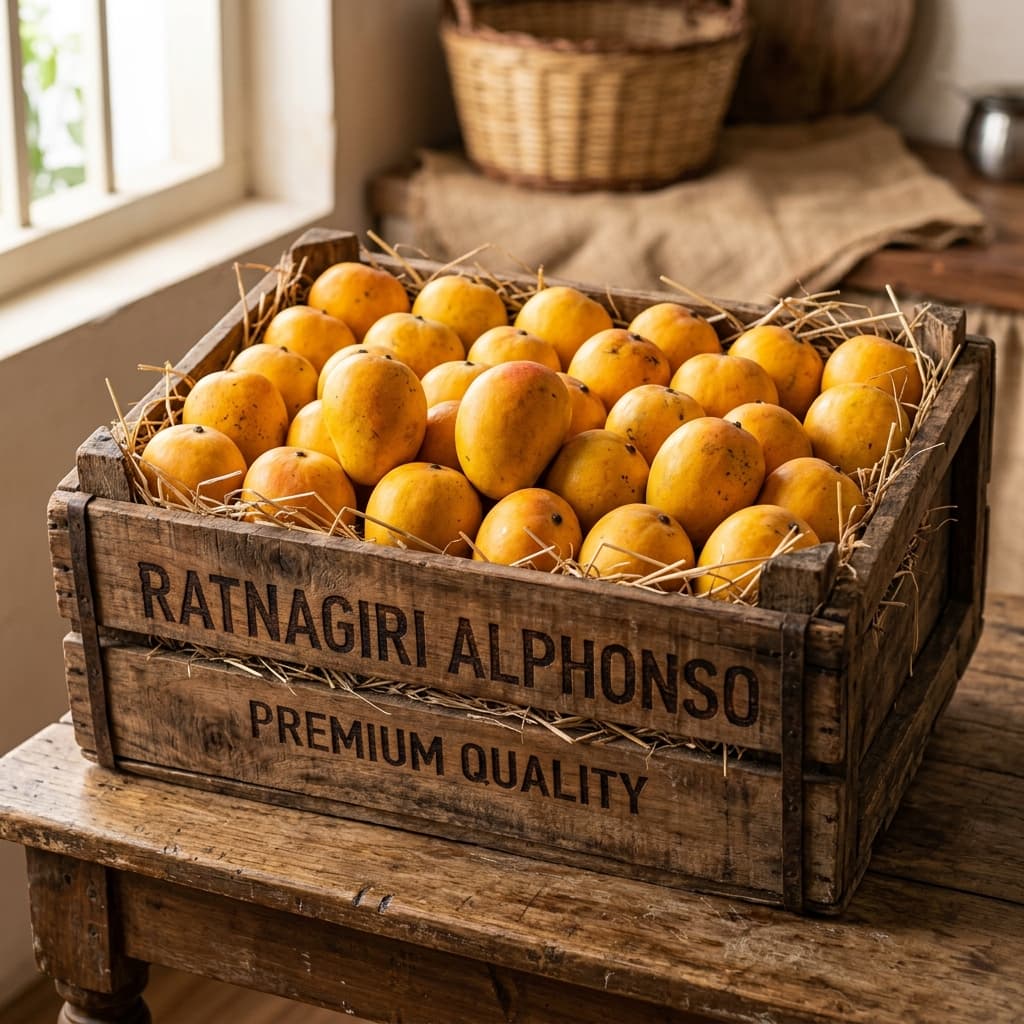
At a Glance: Ratnagiri Hapus
Peak Season
March 15 - June 20
Sweetness (Brix)
18 - 22°
Avg Calories
60 kcal per 100g
The Sensory Experience
Eating a true Ratnagiri Alphonso is a multi-sensory experience. It is famously known for three distinct characteristics:
Unmatched Aroma
Intensely floral and sweet, capable of filling a room with a distinct honey-citrus fragrance.
Buttery Texture
Completely fiberless, buttery, and melts in the mouth. A spoon glides through the golden-saffron pulp effortlessly.
Intense Sweetness
Incredibly sweet with a Brix rating often exceeding 19°, perfectly balanced by a barely perceptible tang.
How to Identify Real Alphonso Mangoes
Because of its high value, the market is flooded with chemically ripened fakes. Here is how you can verify an authentic, naturally ripened Ratnagiri Hapus:
- Check for a subtle sweet aroma at the stem. A chemically ripened mango will have no smell.
- Look for a naturally uneven yellow-gold color with a slight green tinge near the stem. Uniformly bright yellow mangoes are often carbide-ripened.
- The fruit should feel slightly soft to the touch when ripe, yielding gently without feeling mushy.
- Authentic Ratnagiri Hapus has a distinctive, slightly oblique oval shape, unlike the more elongated shapes of other varieties.
Frequently Asked Questions
Taste the Real Ratnagiri Hapus
Order farm-direct, chemical-free Alphonso mangoes delivered straight from the Konkan coast to your doorstep.
Shop Fresh Boxes