The Perfect Alphonso Aamras Recipe (with Poori)
The Perfect Alphonso Aamras Recipe
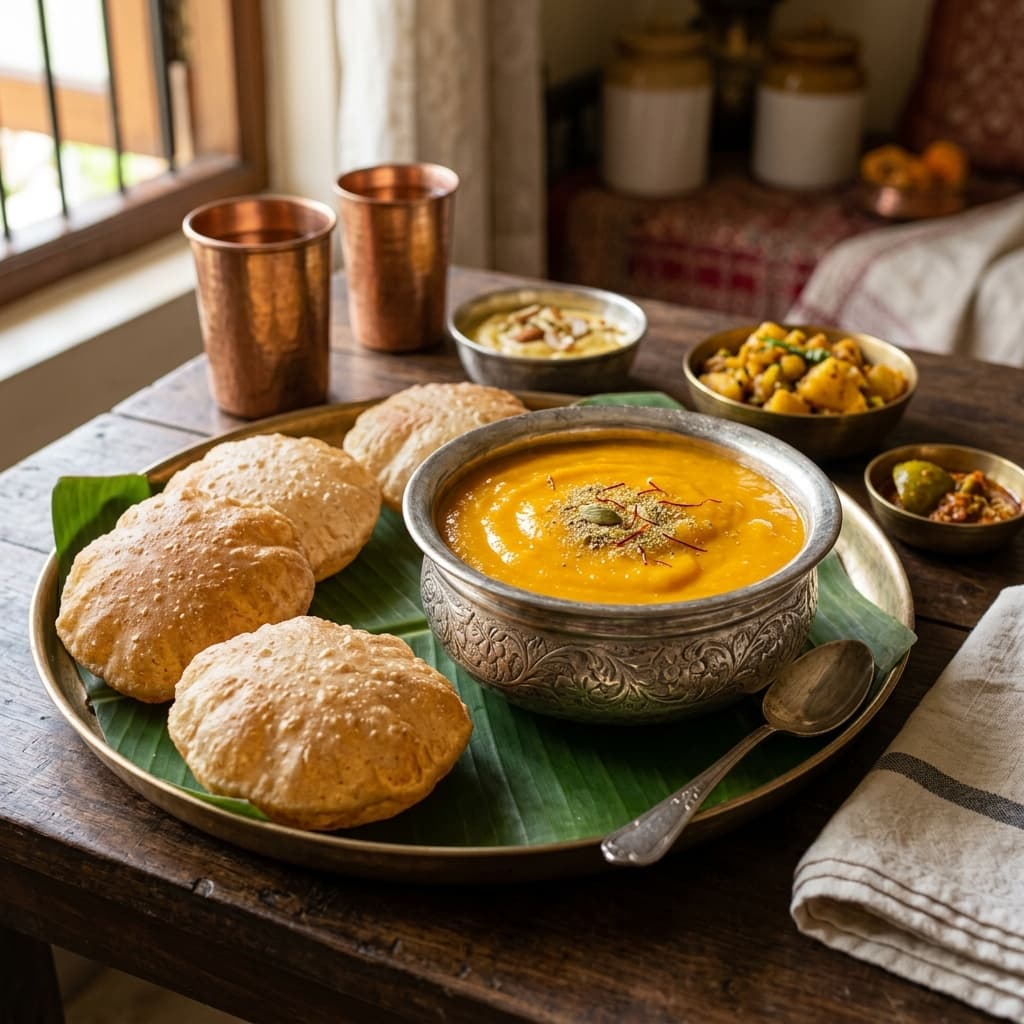
If there is one dish that singularly defines the Indian summer, it is Aamras. A bowl of thick, chilled, golden-orange mango puree served alongside hot, puffed, savory pooris is not just a meal; it is a cultural phenomenon deeply embedded in Maharashtrian and Gujarati households.
While making Aamras sounds deceptively simple (it is essentially just mango pulp), achieving the perfect velvety texture and balanced sweetness requires a specific technique and, most importantly, the right mango.
What is Aamras?
Derived from the Sanskrit words 'Aam' (mango) and 'Ras' (juice), Aamras is a thick, sweetened mango puree flavored with cardamom or saffron, traditionally served as a dessert or a sweet accompaniment to savory breads like Poori or Chapati.
The 'Alphonso Advantage'
You can technically make Aamras with any mango, but true connoisseurs know that Alphonso (Hapus) is the undisputed king of Aamras. There are two scientific reasons for this:
- Zero-Fiber Pulp: Alphonso mangoes have a buttery, completely fiberless flesh. When you blend them, they create a naturally smooth, creamy emulsion without any stringy bits getting stuck in your teeth. You don't even need to strain it.
- High Brix Level: Alphonso mangoes naturally achieve a Brix level (sugar concentration) of 18-22°. This intense natural sweetness means you rarely need to add artificial sugar, preserving the pure mango flavor.
Traditional Maharashtrian Aamras Recipe
This recipe follows the authentic Maharashtrian style, which prefers a very thick, creamy Aamras flavored delicately with cardamom, contrasting with the slightly thinner Gujarati variant that often includes dry ginger (Soonth).
Prep Time: 15 mins | Chill Time: 2 hours | Serves: 4
Ingredients
- 1 Dozen Ripe Aam Native Alphonso Mangoes
- 1 tsp Green Cardamom Powder (Elaichi)
- A pinch of Saffron strands (Kesar) soaked in 1 tbsp warm milk
- Sugar (Optional, only if the mangoes aren't sweet enough)
- A tiny pinch of Salt (to elevate the sweetness)
- A splash of Milk or Water (only if the puree is too thick)
Step-by-Step Instructions
- The Soak (Crucial Step): Wash the mangoes and soak them in a large bowl of plain water for 30 minutes. This removes excess sap (chik) from the skin, which can cause heat and acidity.
- Soften the Fruit: Take a mango in your hands and gently squeeze and roll it between your palms. You are essentially mashing the pulp inside the skin until it feels completely soft and liquid-like.
- Extract the Pulp: Remove the stem (the 'eye' of the mango). You can either squeeze the pulp directly out of the top hole into a large bowl, or peel the skin and scrape the pulp off the seed using your hands. (Traditionally, hands are preferred over a knife to extract maximum juice from the seed).
- Blend (Optional): If you extracted by hand, you will have a thick pulp with small chunks. For a perfectly smooth restaurant-style finish, pulse the pulp in a blender for 10 seconds.
- Flavor: Stir in the cardamom powder, the saffron-infused milk, and the tiny pinch of salt. Taste the Aamras. Only add sugar if you feel it is strictly necessary.
- Chill: Aamras must be served ice-cold. Cover the bowl and refrigerate for at least 2 hours before serving.
Serving Aamras: The Poori Pairing
Aamras is rarely eaten alone. It is traditionally paired with Poori (deep-fried whole wheat Indian bread).
The magic lies in the contrast: the Poori is hot, savory, slightly salty, and crisp, while the Aamras is ice-cold, sweet, and incredibly rich. Tearing off a piece of hot poori, scooping up a massive dollop of cold Aamras, and eating it immediately is the ultimate sensory experience of the Indian summer.
Regional Aamras Variations
How to Freeze Aamras for the Monsoon
Don't want the mango season to end? You can easily freeze Aamras.
Extract the pure mango pulp (do not add milk, water, cardamom, or saffron yet). Store the pure pulp in airtight, freezer-safe zip-lock bags or Tupperware. Freeze it flat. It will keep perfectly for 6 to 8 months. During Diwali or the monsoons, simply thaw the pulp in the fridge overnight, add your spices, and serve!
FAQ
Why did my Aamras turn black/dark? Mango pulp oxidizes when exposed to air for too long, similar to an apple. To prevent this, always store Aamras in an airtight container in the fridge, and you can add a few drops of lemon juice (which contains Vitamin C, an antioxidant) to preserve the bright golden color.
Do I need to add milk to Aamras? Traditionally, no. Alphonso mangoes yield a perfectly thick puree. However, if your mangoes are slightly tart or the puree is too thick for your liking, a splash of cold milk will thin it out and add a creamy finish.
Should I use a blender or mash by hand? Mashing by hand retains slight texture and micro-chunks of mango, which many traditionalists prefer. A blender creates a perfectly smooth, commercial-style puree. It comes down to personal preference.
Can I use Kesar mangoes for Aamras? Yes! Kesar mangoes (the pride of Gujarat) are the second-best choice for Aamras. They are slightly more fibrous than Alphonso but offer an intense sweetness and a vibrant saffron-orange color that looks spectacular in a bowl.
Found this helpful?
Share it with someone who loves mangoes.
Continue Reading
You Might Also Like
Farm-Direct · GI-Certified
Ready to taste the real Alphonso?
Zero carbide. Naturally ripened. Delivered in 24–48 hours.
Shop Mango Boxes →