The Sadhu's Gift: The 250-Year History of the Banarasi Langda
Aam Native Editorial
Aam Native
When you think of a ripe mango, you likely picture a fruit glowing in shades of golden yellow, fiery orange, or vibrant red. Yet, one of India's most celebrated and fiercely loved mango varieties defies this rule completely: the Banarasi Langda.
Even when perfectly ripe, bursting with intense sweetness, and dripping with nectar-like juice, the Langda remains stubbornly, vibrantly green. But its unique color is only the second most interesting thing about it. The most interesting is its name, and the 250-year-old story behind it.
The Lame Sadhu of Varanasi
The word "Langda" translates directly to "lame" or "limping" in Hindi. Why would one of the most premium, delicious fruits in the world bear such an unflattering name?
What is Langda Mango?
A premium mango variety from Northern India, known for retaining its green skin when ripe and possessing an intensely sweet, highly aromatic, and slightly fibrous pulp.
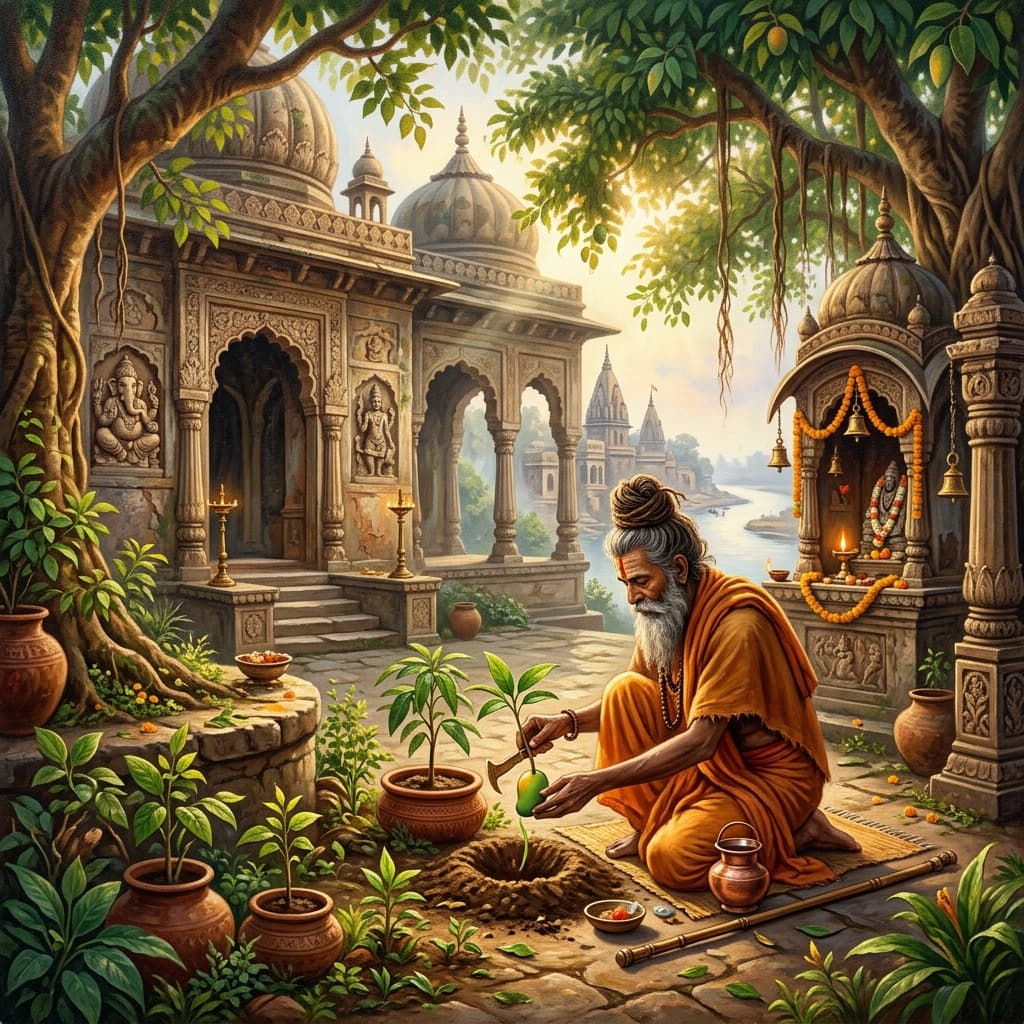
The legend takes us back roughly 250 years to the ancient, spiritual city of Varanasi (Banaras). According to local historians, a wandering ascetic—a sadhu who happened to be lame—took up residence in a small Shiva temple in the city.
One day, he planted a mango seed in the temple courtyard. He carefully tended to the sapling, and after a few years, the tree bore fruit. The mangoes were unlike anything the locals had ever seen: they stayed green, yet their aroma was intoxicating, and their flesh was sweeter than honey.
A Gift to the City
The sadhu freely shared the fruit with devotees and neighbors, but he strictly forbade anyone from taking a cutting or sapling from his miraculous tree.
However, the flavor was too spectacular to remain a secret. Legend has it that after the sadhu passed away, the locals and local nobility took grafts from the mother tree and began planting them across the fertile Gangetic plains of Varanasi. Because the original tree belonged to the lame ascetic, the locals affectionately—and permanently—named the variety "Langda" in his honor.
The Langda Experience
Today, the Banarasi Langda is an obsession in Northern India. It typically arrives in the market in mid-to-late June, signaling the peak of the North Indian summer.
Its defining characteristics are:
- Green Skin: It rarely turns yellow. You determine its ripeness by its strong, sweet aroma and a slight softness when gently pressed.
- Intense Aroma: A single ripe Langda can perfume an entire room.
- Extreme Sweetness: It has one of the highest sugar contents of any mango variety, with a very thin skin and a small seed.
From Varanasi to Your Door
At Aam Native, we source our Langda mangoes from heritage orchards in the Varanasi-Lucknow belt. We honor the legacy of the Sadhu's original tree by ensuring our mangoes are entirely organic, naturally ripened, and completely free of artificial ripening agents like calcium carbide.
Experience the sweet, green magic of the Banarasi Langda this season.